
By Tanya Gordon, Tanya Gordon Real Estate Group | Halloween Edition
Happy Halloween, Durham Region.
Most of the time, my job is helping people find a home that feels like a fresh start. But every so often, a property comes with a past nobody mentioned. A ghost story. A crime. A door that was never supposed to be opened.
In real estate, we call these stigmatized properties. The home itself may be perfectly sound. It is the history that makes people shiver.
So grab a coffee (or a candy bar from the Halloween stash) and read on. Here are six true stories from buyers and sellers, each with a link to the full report. They are curious, a little creepy, and surprisingly useful if you ever buy or sell a home.
Story 1: The House a Court Declared Haunted
Nyack, New York
This is the most famous haunted house case in real estate history, and yes, it really happened. In 1989, a family was about to sell a grand Victorian on the Hudson River to a buyer who had no idea the house was widely known as haunted. The seller had not just tolerated the ghost stories. She had repeatedly told the public her home was haunted.
When the buyer found out, he went to court. In 1991, a New York court sided with him, and the case became known as the "Ghostbusters ruling." The takeaway for the legal world: if you promote a haunting, you cannot pretend it does not exist at closing.
Why it matters: Whatever story a home carries, honesty at the start protects everyone, including the seller.
Read the full story at the ABA Journal
Story 2: The Family That Lasted One Month
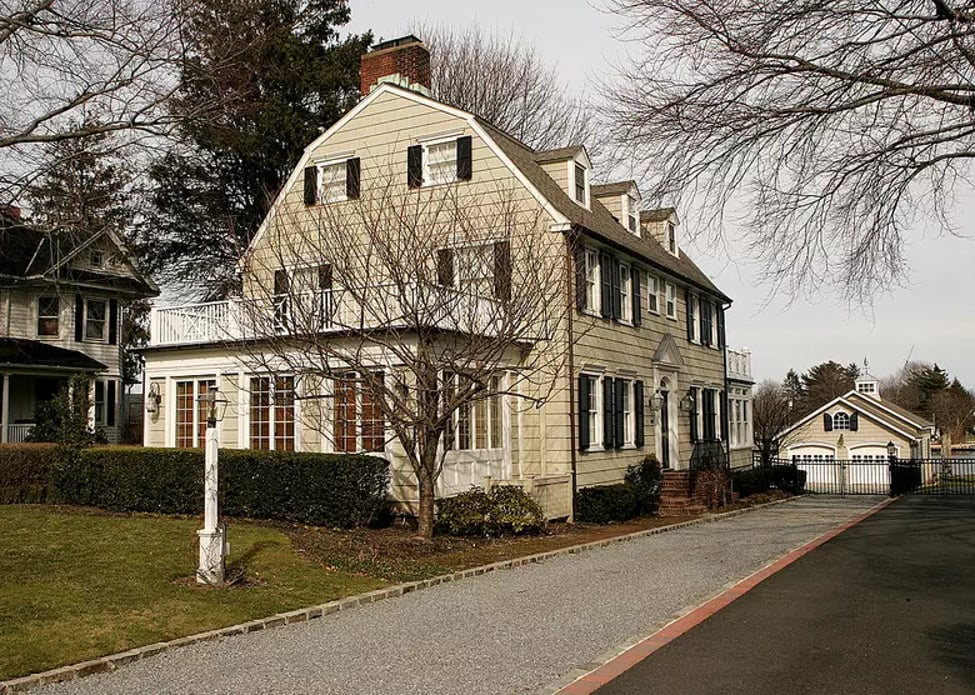
Amityville, New York
You may know the movie. Here is the real estate side of it. After a mass murder inside the home in the 1970s, a new family bought the house and moved in. They stayed only about a month, saying strange disturbances drove them out. One detail that gets told again and again: the husband reportedly woke at 3:15 every morning, around the time of the earlier tragedy.
What happened to the house afterwards is the part buyers and sellers should notice. Later owners changed the official address (112 to 108 Ocean Avenue) to keep curious visitors away. When the home finally sold in 2017, it went for $605,000, roughly $200,000 less than the original asking price.
Why it matters: Fame and stigma can follow a property for decades. Pricing has to reflect that reality, not wishful thinking.
Read the full story on Biography.com
Story 3: The Buyer Who Saw His Future Home on the Evening News
Orangeville, Ontario
This one is close to home. A first-time buyer with three kids had just handed over a $5,000 deposit on a townhouse. A few days later, he was watching the news and saw that very house on screen. It had belonged to a local nurse whose death was still unsolved, and the report said her home had just sold.
He had not been told. It took almost three weeks, but he got out of the deal and received his full deposit back. He also filed a complaint with the Real Estate Council of Ontario. The broker for the estate said the buyer was released and that nothing about the home's history was hidden, and the next buyer was told differently.
Why it matters: In Ontario, buying a home means doing your homework early, and agents have a duty to share material facts they know about. Which brings us to the next story.
Read the full Toronto Star story (reposted copy)
Story 4: The Bowmanville Couple Who Say They Were Never Told
Bowmanville, Ontario
A Bowmanville couple bought a home, then discovered it had been the scene of a double homicide 15 years earlier. They believed neither their agent nor the former owners had mentioned it. They sued, and their claim described the history as a "material defect" that tainted the property.
As reported at the time, Ontario's rules require agents to know the facts about a property and disclose material facts to their clients. The Real Estate Council of Ontario's guidance was refreshingly simple: if you feel it is relevant, it is probably worth mentioning.
Why it matters: One conversation before the offer can prevent a lawsuit after closing. Transparency is not a risk. Surprise is.
Read the full story on Yahoo Canada
Story 5: The $6.1 Million Mansion and the $300,000 Deposit
Vancouver, British Columbia
A buyer made a $6.1 million offer on a 9,000 square foot mansion and sent a $300,000 deposit. Before closing, the buyer asked a simple question: why are you selling? The answer involved moving abroad and a daughter wanting a location closer to her child's school.
What was not mentioned was the unsolved, suspected gang-related killing of the owner's son-in-law at the front gate of the property in 2007. When the truth surfaced, the buyer backed out. The B.C. Supreme Court called it fraudulent misrepresentation and ordered the deposit returned.
Why it matters: Sellers do not always have to volunteer a stigma, but they cannot give a false answer when asked. Honest answers are the foundation of every good negotiation.
Read the full story on Global News
Story 6: The Downtown Toronto Home That Became a Rental
Toronto, Ontario
Not every story ends in court. Sometimes it ends in a smart plan.
A "stunning" downtown Toronto home became hard to sell after a fatal domestic incident made headlines. The listing broker told buyers the truth, but the story was already everywhere thanks to heavy media coverage. Rather than sit on the market at a discount, the owners leased the home to cover carrying costs. The tenants knew its history. Once the media attention faded, the property sold.
Why it matters: When timing works against you, strategy beats panic. A pause, a pivot, and a patient plan can protect a seller's bottom line.
Read the full story on Global News
What Ontario's Rules Actually Say
Here is the part that surprises many people. In Ontario, sellers generally have no legal duty to volunteer a stigma such as a past death. But agents have ethical and regulatory duties to discover and disclose material facts they know about. And no one can lie when asked directly.
Put simply, the law leans toward "buyer beware," which makes good questions and a good agent your best protection.
What This Means for Buyers
- Ask directly. Has anyone passed away in the home? Has there been a crime or any other event that could affect the property's reputation?
- Talk to the neighbours. They often know the whole story, usually in great detail.
- Watch for listings that say "call listing agent before offering." It can be nothing. It can be a big something.
- Add a clause where the sellers confirm, to the best of their knowledge, that the home has not been stigmatized by events such as a death or a grow-op.
- Work with an agent who asks the uncomfortable questions for you. That is where negotiation skill earns its keep.
What This Means for Sellers
If your home has a history, you do not need to panic. You need a plan. Within the Signature Seller System™, we approach this with strategic pre-marketing, pricing validation, buyer psychology, and controlled exposure, all built into a 3-phase marketing strategy. That means we decide how and when the story is shared, so buyers hear it from us, calmly and clearly, rather than from the neighbour across the street.
The best outcomes I see are never from hiding something. They are from preparing buyers so well that nothing feels like a surprise.
A Final Thought From Me
As a Durham Region REALTOR® with AREN and PREN negotiation designations, I have learned that trust is the real currency of a home sale. Whether you are buying in Whitby, selling in Oshawa, or exploring Ajax or Bowmanville, the goal is the same: no scary surprises.
Curious what your neighbourhood's story looks like? Message me, and I will gladly walk you through the history, the numbers, and the strategy behind any Durham Region property.
Happy Halloween, and stay safe out there.
